Digital All-on-X Restoration involves applying digital technology in full-mouth rehabilitation using dental implants. The use of digital technology in this process greatly improves accuracy and efficiency. The key steps involving digital technology in All-on-X restoration are:
- Digital scanning: Using an intraoral scanner to scan the patient’s mouth instead of traditional impressions. This reduces discomfort and increases accuracy in creating dental models.
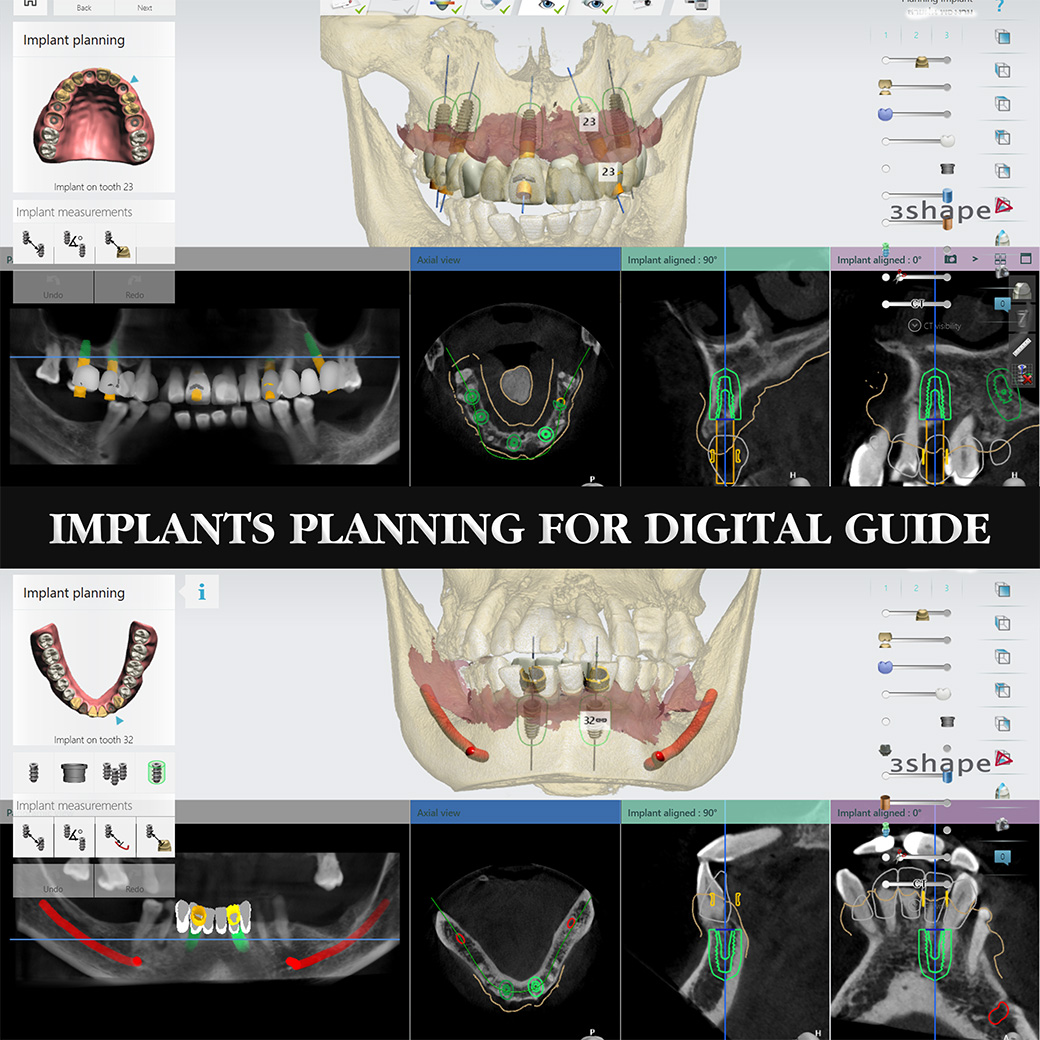
- Computerized treatment planning: Using CAD/CAM (Computer-Aided Design/Computer-Aided Manufacturing) software to plan implant placement and design prosthetic teeth. This allows dentists to simulate and adjust the treatment plan as needed.
- 3D printing: Using 3D printers to create prosthetic models and necessary components, enabling high precision and customized design.
- Guided implant surgery: Using navigation technology to assist in precise implant placement, making surgery safer and more efficient.
- Digital evaluation and follow-up: Using digital technology to monitor treatment results and adjust prosthetics as needed, allowing continuous and effective patient care.
The use of digital technology in All-on-X restoration not only increases accuracy and efficiency in treatment but also reduces time and inconvenience for patients. It also helps produce high-quality prosthetic teeth with natural aesthetics.
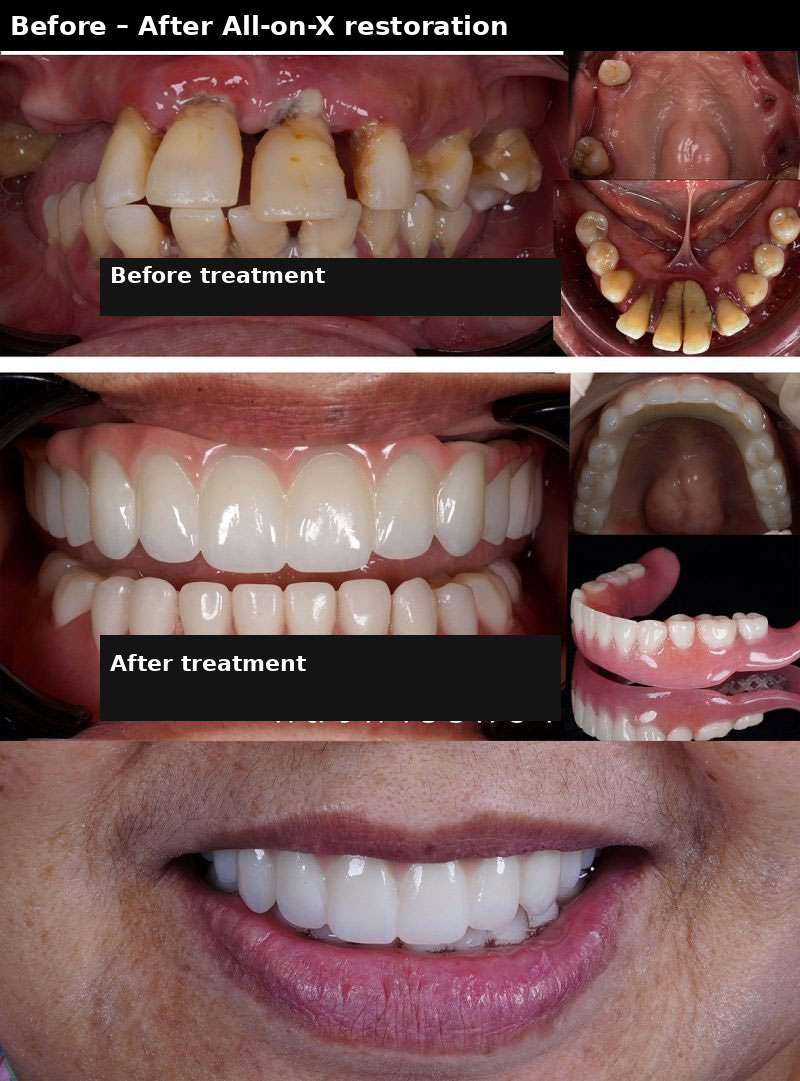
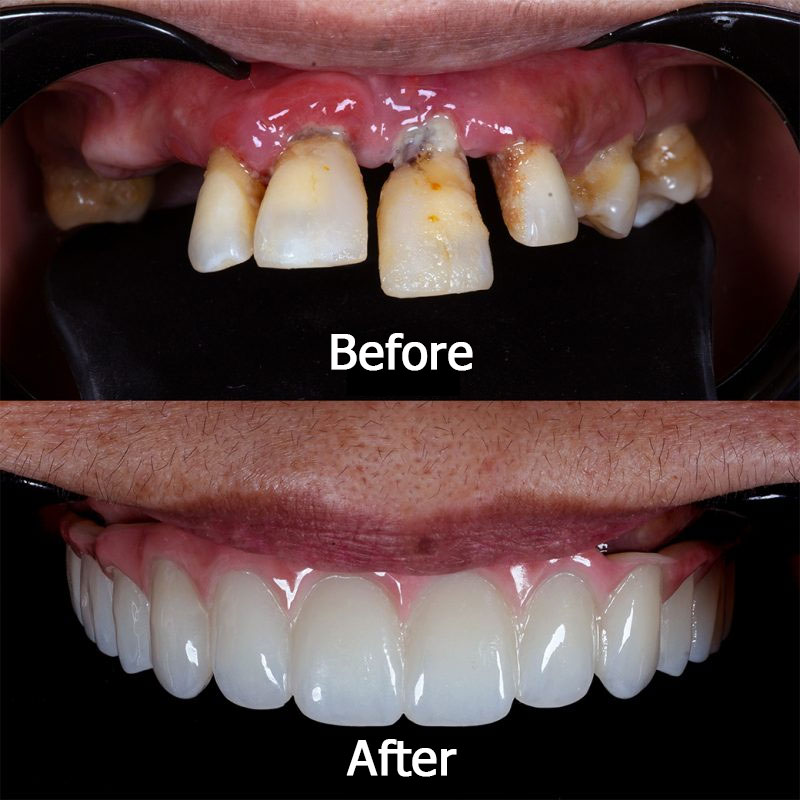
This patient presented with mobile teeth throughout the mouth, pain when chewing, and aesthetic concerns that made them reluctant to smile. After history taking, oral examination, and radiographic imaging, the patient was diagnosed with severe periodontitis and the teeth could not be preserved. After treatment planning with the patient, the plan was to place a fixed prosthesis in the upper jaw supported by 5 implants (All-on-5), and a removable prosthesis in the lower jaw supported by 2 implants (implant-retained overdenture). A digital scan and 3D X-ray were then performed to design the prosthesis and surgical guide.
During treatment, the patient underwent tooth extraction and immediate implant placement. Then, a healing period of 3 months was allowed for osseointegration, during which a temporary full-arch prosthesis was provided for function and aesthetics. After 3 months, the final prosthesis was placed, and follow-up appointments were scheduled every 6 months.